 Johanna Lundström
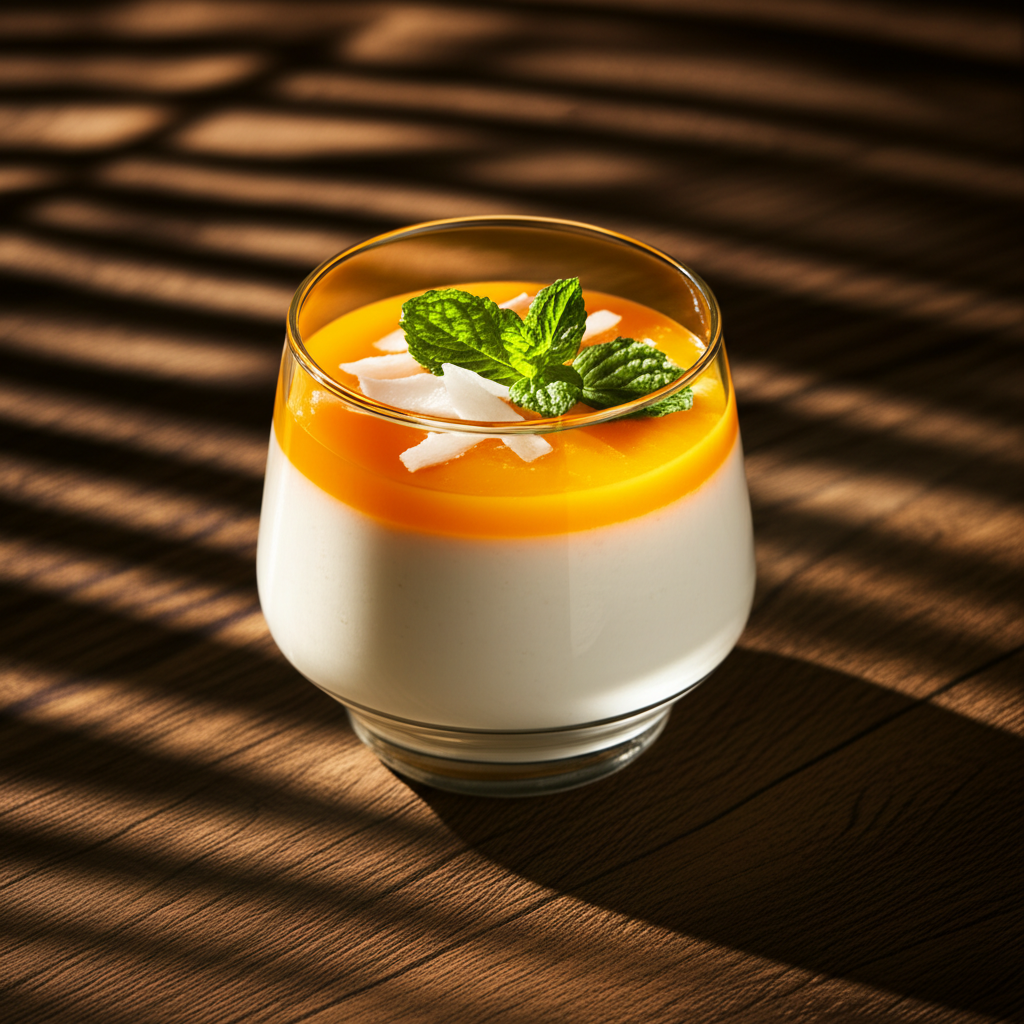
I first tasted panna cotta on the back patio of a tiny café in Ubud, Bali — the kind of place you stumble into after getting lost down a rice paddy trail. The chef used fresh coconut milk from the tree out front and mangoes so ripe they practically melted off the spoon. I spent the entire flight home trying to reverse-engineer what I’d eaten, and after a few weeks of tinkering in my kitchen, this is what I landed on. It’s creamy, barely sweet, and that mango coulis on top catches the light like liquid gold. Every time I make it, I’m back on that patio.
Ingredients
Coconut Panna Cotta
- 1 can (13.5 oz) full-fat coconut milk, well shaken
- ½ cup coconut cream (the thick part from a chilled can of coconut milk)
- 3 tablespoons pure maple syrup
- 1 teaspoon pure vanilla extract
- Pinch of fine sea salt
- 2½ teaspoons unflavored gelatin powder (or 1 teaspoon agar agar powder for vegan)
- 3 tablespoons cold water (for blooming the gelatin)
Mango Coulis
- 2 large ripe mangoes, peeled and diced (about 2 cups)
- 1 tablespoon pure maple syrup (adjust to mango sweetness)
- 1 tablespoon fresh lime juice (about half a lime)
- 1 tablespoon cold water, if needed to thin
Garnish
- 2 tablespoons unsweetened toasted coconut flakes
- Fresh mint leaves
- Extra diced mango (optional)
Instructions
- Bloom the gelatin: Sprinkle the 2½ teaspoons gelatin powder evenly over 3 tablespoons of cold water in a small bowl. Do not stir — just let it sit undisturbed for 5 minutes. It will absorb the water and turn into a spongy mass. If using agar agar, skip this step.
- Warm the coconut milk: Pour the full can of coconut milk and the ½ cup coconut cream into a small saucepan over medium-low heat. Add the maple syrup, vanilla extract, and sea salt. Stir gently with a whisk until everything is combined and the mixture is warm to the touch — about 150°F (65°C). You want steam rising but absolutely no bubbling. This takes about 3–4 minutes.
- Dissolve the gelatin: Remove the saucepan from heat. Add the bloomed gelatin (it should be a firm, jiggly mass by now) directly into the warm coconut milk. Whisk steadily for 60 seconds until completely dissolved — no lumps should remain. If using agar agar instead, whisk 1 teaspoon agar powder into the coconut milk while still on heat, bring to a gentle simmer, and stir for 2 minutes (agar needs heat to activate).
- Pour into molds: Divide the mixture evenly among 4 glass ramekins, small jars, or dessert cups (about ½ cup each). Tap each one gently on the counter to release any air bubbles.
- Chill until set: Cover each ramekin with plastic wrap or a small plate and refrigerate for at least 4 hours, or overnight for the firmest set. The panna cotta is ready when it jiggles like a soft custard when nudged but holds its shape.
- Make the mango coulis: While the panna cotta sets, blend the diced mango, maple syrup, and lime juice in a blender or food processor until completely smooth — about 30 seconds on high. Taste and add more maple syrup if your mangoes aren’t super sweet. If the coulis is too thick to pour, add 1 tablespoon of cold water and blend again. Refrigerate until ready to serve.
- Toast the coconut: Heat a dry skillet over medium heat. Add the coconut flakes and stir constantly for 2–3 minutes until golden brown and fragrant. Transfer immediately to a plate — they’ll burn fast if left in the hot pan.
- Assemble and serve: Spoon 2–3 tablespoons of mango coulis over each chilled panna cotta. Top with toasted coconut flakes, a few pieces of fresh diced mango if desired, and a sprig of mint. Serve cold.
Tips
- Gelatin vs. agar agar: Gelatin gives a silkier, melt-in-your-mouth texture. Agar agar sets firmer and is fully vegan — both work, but the experience is different. If going agar, use exactly 1 teaspoon powder (not flakes).
- Coconut milk matters: Use full-fat canned coconut milk — not the carton kind from the refrigerated section, which is too thin. Look for brands with just coconut and water (no gums or stabilizers).
- Make-ahead friendly: The panna cotta keeps beautifully in the fridge for up to 3 days. Add the coulis and garnishes just before serving for the freshest presentation.
- No mangoes? Swap in passion fruit pulp, blended strawberries, or a quick stovetop blueberry compote for a different twist.
- Unmolding (optional): If you want to plate them freestanding, dip each ramekin in warm water for 10 seconds, run a thin knife around the edge, and invert onto a plate. This works best with the gelatin version.
- Mango tip: Look for Ataulfo (honey) mangoes when in season — they’re sweeter, creamier, and less fibrous than regular mangoes.