 River Santos
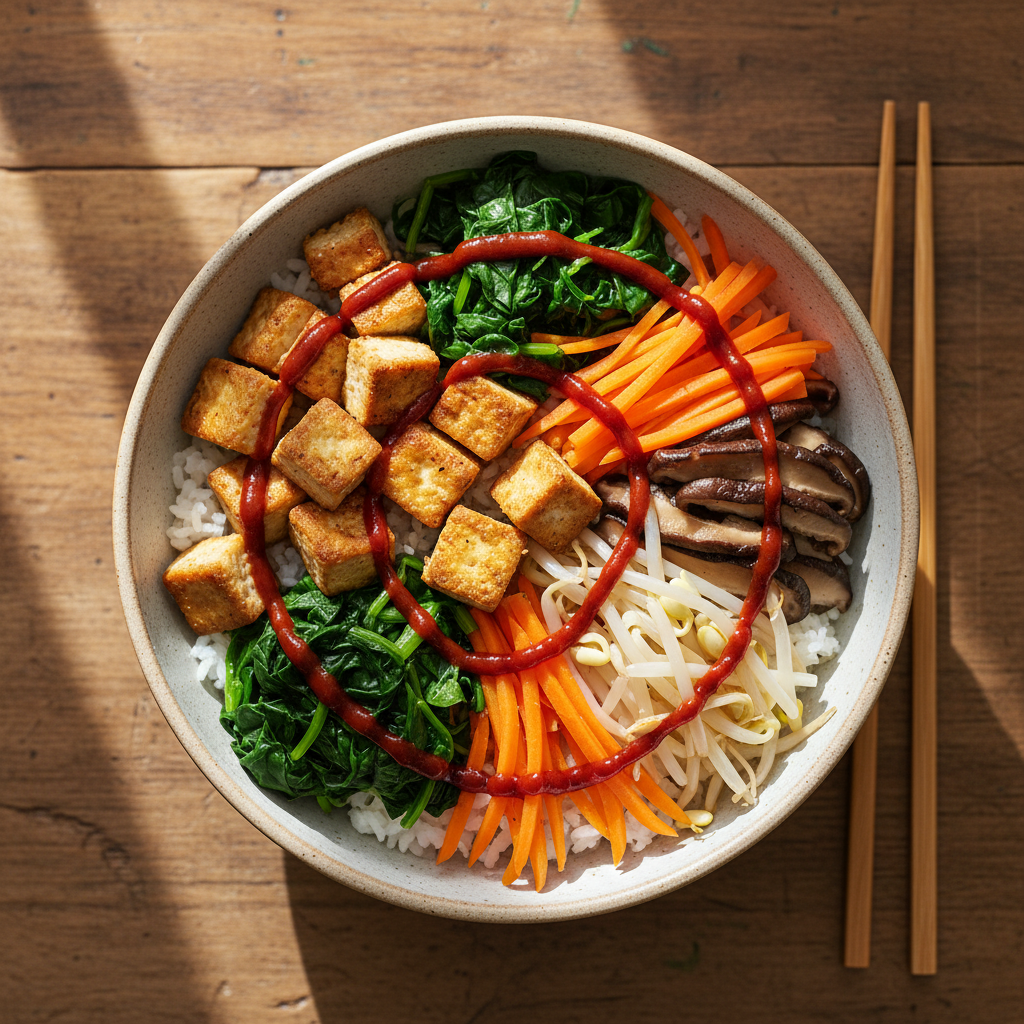
There’s something almost meditative about building a bibimbap bowl — each vegetable gets its own moment in the pan, each color tells a story on the plate. I first fell in love with Korean cuisine at a tiny restaurant near my yoga studio in North Park, and I’ve been recreating plant-based versions at home ever since. This stovetop bibimbap is my go-to weeknight bowl when I want something nourishing, beautiful, and absolutely packed with flavor. The crispy tofu and spicy gochujang sauce tie everything together in the most satisfying way.
aka The Seoul Bowl
Ingredients
- For the Rice:
- 1 cup white rice (yields ~2 cups cooked)
- 2 cups water
- For the Tofu:
- 14 oz firm tofu, drained and cubed
- 1 tablespoon avocado oil
- 1 tablespoon coconut aminos
- For the Vegetables:
- 1 tablespoon sesame oil
- 4 cups fresh spinach
- 2 medium carrots, julienned
- 1 medium zucchini, sliced into half-moons
- 8 oz mushrooms, sliced
- 1 cup bean sprouts
- For the Gochujang Sauce:
- 2 tablespoons gochujang
- 1 tablespoon sesame oil
- 1 tablespoon coconut aminos
- 1 teaspoon maple syrup
- 1 teaspoon rice vinegar
- Toppings:
- Sesame seeds
- 2 green onions, sliced
- Vegan kimchi (optional)
Instructions
- Cook the rice: Rinse rice under cold water. Combine rice and 2 cups water in a pot, bring to a boil, reduce heat to low, cover, and simmer for 15-18 minutes until water is absorbed. Fluff with a fork and set aside.
- Press and fry the tofu: Press tofu for 5 minutes to remove excess moisture, then cut into cubes. Heat avocado oil in a large skillet over medium-high heat. Add tofu and cook 8-10 minutes, turning occasionally, until golden and crispy on all sides. Drizzle with coconut aminos in the last minute. Transfer to a plate.
- Sauté the vegetables: In the same skillet, heat sesame oil over medium heat. Cook carrots for 3 minutes, then add mushrooms and zucchini and cook another 3-4 minutes until tender. Add spinach and bean sprouts and cook 1-2 minutes until spinach wilts. Season with a splash of coconut aminos if desired.
- Mix the sauce: Whisk together gochujang, sesame oil, coconut aminos, maple syrup, and rice vinegar in a small bowl until smooth.
- Assemble the bowls: Divide rice among 4 bowls. Arrange vegetables and crispy tofu on top in sections. Drizzle generously with gochujang sauce, sprinkle with sesame seeds and green onions, and serve with kimchi on the side.
Tips
- For extra crispy tofu, toss cubes in a light coating of cornstarch before frying.
- Make it a crispy rice bowl by pressing the rice into the hot skillet with a bit of sesame oil until the bottom gets golden and crunchy.
- Prep all your vegetables before you start cooking — bibimbap is all about the assembly.
- Store leftover sauce in the fridge for up to a week. It’s incredible on everything.
- Swap any vegetables based on what’s in season — sweet potato, kale, or bell peppers all work beautifully.